We provide an investor's perspective on the SpaceX-xAI merger, the largest in history, valued at reportedly $1.25 trillion. You will learn how the deal was structured as a triangular merger to preserve legal separation, why the orbital data centre thesis may represent genuine optionality or narrative construction, and what the transaction's mechanics may signal for interested investors.
Approximately 25,000 miles per hour. That's the velocity needed to escape Earth's gravitational pull. That's the escape velocity needed to break free from Earth's gravitational pull. On 2 February 2026, Elon Musk calculated a different kind of escape velocity, one measured not in thrust and fuel, but in compute capacity, valuations, and the willingness to merge two seemingly incompatible businesses into something the world has never seen before.
SpaceX acquired xAI in a deal valued at $1.25 trillion, with SpaceX valued at $1 trillion and xAI at $250 billion, creating not just the largest merger in history, but a fundamental reimagining of where artificial intelligence lives, how it scales, and who controls the infrastructure underneath it all.
For investors tracking secondary market opportunities in private markets, this isn't just another headline-grabbing deal. It may represent a fundamental reshaping of how value gets created and captured in the modern investment landscape.
The Deal: Capital Restructuring or Strategic Masterstroke?
The merger reportedly values SpaceX at approximately $1 trillion and xAI at approximately $250 billion, with the deal structured as a share exchange where one xAI share converts to approximately 0.1433 shares of SpaceX stock. On paper, it looks like a standard acquisition. But the reported financial details suggest a different story may be unfolding.
SpaceX reportedly generated an estimated $8 billion in EBITDA profit on $15 to $16 billion of revenue in 2025, driven by its Starlink satellite internet business and dominant launch services. Meanwhile, xAI was reportedly burning approximately $1 billion a month, racing to build AI infrastructure competitive with OpenAI and Anthropic.
The financial contrast is notable: SpaceX appeared financially self-sufficient, while xAI appears to have faced significant capital requirements.
For xAI shareholders, the merger may have provided a liquidity pathway: converting stakes in a cash-burning AI startup into equity in one of the world's most valuable private companies with a potential path to public markets. For SpaceX shareholders? An estimated 20% dilution event in exchange for exposure to an early-stage AI business and a vision of computing infrastructure orbiting overhead.
What Changed | SpaceX | xAI |
Pre-Merger | Profitable rocket & satellite company | Reportedly burning ~$1B/month, uncertain exit |
Post-Merger | Estimated ~20% diluted, tied to the orbital data centre bet | Access to SpaceX capital & potential IPO path |
The structure may reveal strategic intent. Rather than fully combining the companies, Musk opted for a triangular merger, with xAI remaining a wholly owned subsidiary, preserving separate legal and financial identity while maintaining consolidated economics. From an investment perspective, some observers have characterised this as a capital restructuring presented as strategic convergence, though the full strategic rationale may only become clear over time.
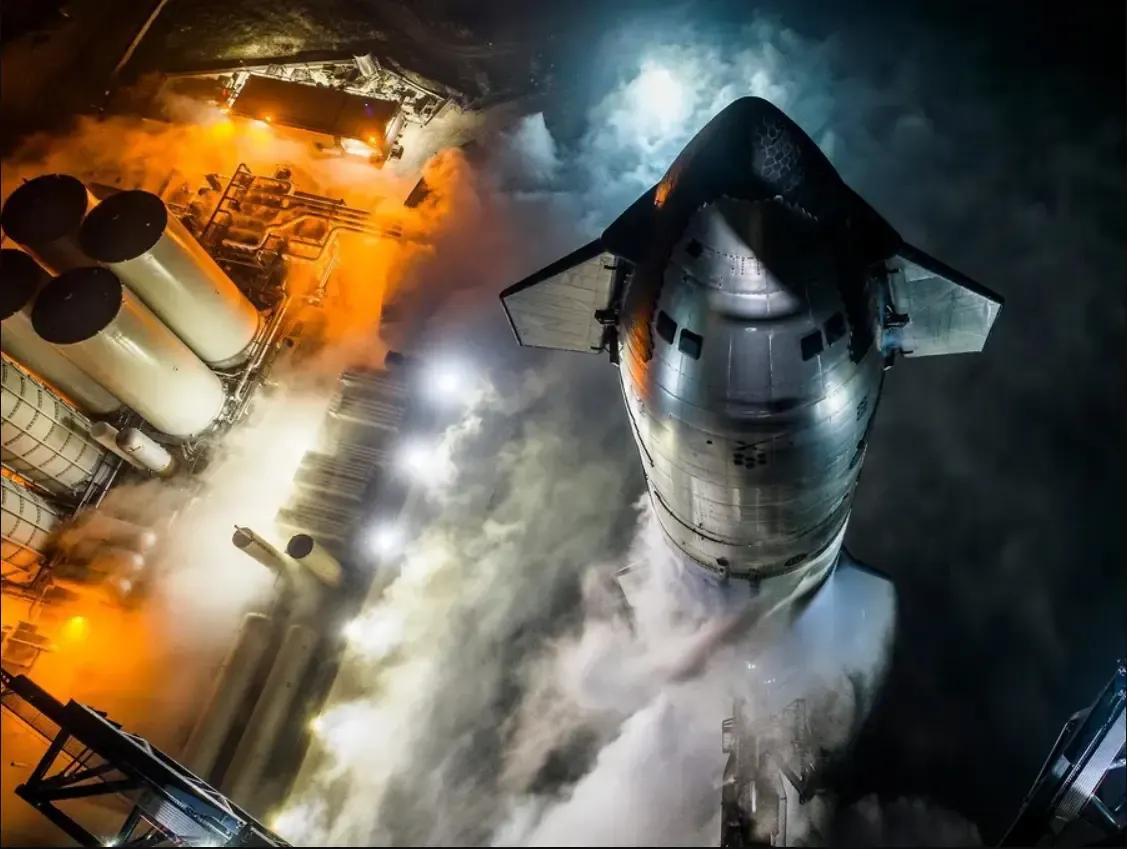
Orbital Data Centres: Sci-Fi Economics or Genuine Innovation?
The stated rationale for the merger? Building data centres in space.
SpaceX filed with the FCC to launch up to one million satellites that would operate as orbital data centres, proposed to operate at altitudes ranging from 500 km to 2,000 km. The vision: AI computing powered by continuous solar energy, cooled by the vacuum of space, unconstrained by terrestrial electricity grids.
Musk has stated that "the lowest cost place to put AI will be space, and that'll be true within two years, maybe three at the latest." The technical case may have genuine logic. According to the filing, satellites would be positioned to maximise time in the sun, with the company suggesting they could remain solar-powered for the vast majority of their operations. No cooling water. No grid constraints. No local opposition.
The challenges may extend beyond launch cadence. Radiation hardening, thermal management across satellite surfaces, inter-satellite communication at terabit scales, and five-year replacement cycles would all appear to demand engineering breakthroughs. Analysts have noted a full-scale rollout appears unlikely in the near term, given technical, supply-chain and financial challenges, which would require new solutions for radiation protection and cooling in space.
However, dismissing the concept entirely may overlook relevant developments: competitors including Blue Origin, Nvidia-backed Starcloud, and Google are reportedly pursuing similar architectures. For those investing in AI infrastructure, orbital computing could represent a genuine optionality: high risk, but potentially transformational.
Market reception: Divided sentiment
The deal comes ahead of a reportedly highly anticipated SpaceX IPO later this year, with the company reportedly looking to raise up to $50 billion at a valuation as high as $1.75 trillion.
Some institutional investors may see AI exposure wrapped in SpaceX credibility: a unique asset combination that may be unavailable elsewhere. Defence positioning could add institutional comfort, with government backing visible in reported Pentagon contracts and administration support.
Market sentiment appears divided. Some may see a generational infrastructure company. Others may see a generational exit opportunity for xAI investors. Both appear to be positioning accordingly.
The IPO play: From private marvel to public market test
One interpretation of the merger's rationale becomes apparent when examining what may come next.
If IPO plans and valuation are achieved, this could potentially surpass Saudi Aramco's 2019 debut as one of the largest listings in history.
By completing the xAI merger before going public, the structure may accomplish several objectives: providing xAI investors a liquidity path without forcing a standalone AI IPO, adding AI narrative appeal for public market investors, potentially justifying orbital data centre capex as a strategic imperative rather than a moonshot, and consolidating corporate structure ahead of public scrutiny.
At $1.75 trillion, SpaceX-xAI would command more than 60 times projected 2026 revenues, a demanding multiple that would appear to price in near-flawless execution across launch services, Starlink expansion, xAI profitability, and orbital computing deployment.
One perspective: at $1.75 trillion, the IPO would appear to price in significant success across all business lines. Any stumble could trigger substantial repricing. For sophisticated investors exploring pre-IPO opportunities in growth equities, timing may matter more than thesis.
Investment implications: Access, timing, and risk
The merger may create both opportunity and complexity.
The potential opportunity: access to a potentially significant asset combination before public markets may reprice it. SpaceX’s combined post-merger valuation would narrow the gap with Tesla and could position the combined company among the world's most valuable enterprises even before going public.
The complexity: the merger could bring potential redirection of SpaceX profits to fund xAI's infrastructure costs, plus regulatory concerns as xAI faces investigations across multiple jurisdictions, including the European Commission, UK, India, Malaysia, Indonesia, and California, over its Grok image generator. Legal and regulatory risks could now flow across the consolidated entity.
What’s next?
The staggering valuation may represent more than corporate engineering. It's a bet that the future of computing could live beyond Earth's atmosphere, that vertical integration from rockets to algorithms might create defensible value, and that public markets could validate private market pricing.
For investors, the SpaceX-xAI merger could be viewed as a masterclass in narrative construction meeting capital markets mechanics. Whether orbital data centres materialise or remain speculative, the deal may demonstrate how modern corporate structures blur lines between capital restructuring, strategic combination, and visionary infrastructure plays.
The real question may not be whether space-based AI computing works technically. It could be whether you're investing in the infrastructure layer of humanity's next frontier, or funding someone else's exit from an expensive experiment. For interested investors, the verdict may not come from today's valuation multiples. It may come from what actually launches, when and if it actually returns to Earth.
This article is for informational and educational purposes only and should not be construed as investment, financial, legal, or tax advice. It represents our analysis and viewpoint and is not a recommendation to buy, sell, or hold any security. Investing in private, venture-backed companies like SpaceX and xAI involves a high degree of risk, including the risk of complete loss of investment. Past performance, growth, and valuations are not indicative of future results. Any forward-looking statements, including projections regarding future revenue, valuation, capacity expansion, and IPO timelines, are speculative and subject to change. Readers should conduct their own due diligence and consult with a qualified financial advisor before making any investment decisions.

Samuel Hieber

Bringing a wealth of experience with close to two decades in the world of investment management, Samuel thrives in the dynamic landscape of financial dealings. A seasoned professional with a keen eye for strategic investments. He embodies a startup mindset, and revels in crafting and executing deals that pave the way for success.